Broker Insights
South East Queensland Property Outlook – 2026
19.06.2026
Market Commentary
South East Queensland (SEQ) continues to stand out as one of Australia’s strongest-performing property markets, supported by exceptional population growth, ongoing infrastructure investment, and a chronic shortage of housing supply.
The region has experienced significant capital growth over recent years, with Brisbane now firmly established as a million-dollar median house price market. While growth rates may moderate from recent peaks, the underlying fundamentals remain highly supportive of continued long-term performance.
Population growth remains the key driver of demand, with Queensland continuing to attract strong interstate migration from New South Wales and Victoria. Combined with historically low vacancy rates and limited new housing supply, this has created one of the most competitive residential markets in the country.
The ongoing delivery of major infrastructure projects and preparations for the Brisbane 2032 Olympic Games continue to support confidence across residential, commercial, and development sectors, while creating long-term economic benefits throughout the region.
At the same time, affordability pressures are increasingly directing buyers towards outer-ring suburbs and emerging growth corridors where housing remains relatively accessible compared with inner Brisbane locations.
Strong Economic Fundamentals
Population Growth
Queensland continues to attract new residents at one of the fastest rates in Australia.
Key drivers include:
- Strong interstate migration from NSW and Victoria.
- Continued overseas migration.
- Lifestyle benefits and employment opportunities.
- Relative affordability compared to Sydney and Melbourne.
This sustained population growth continues to underpin demand across both owner-occupier and investment markets.
Employment Growth
SEQ benefits from a diverse and resilient economy supported by:
- Healthcare and social assistance.
- Education and training.
- Professional services.
- Infrastructure and construction.
- Tourism and hospitality.
Strong employment conditions continue to support housing demand and economic activity throughout the region.
Lifestyle Appeal
South East Queensland remains highly attractive due to:
- Subtropical climate.
- Coastal lifestyle opportunities.
- Strong employment prospects.
- Greater housing affordability relative to southern capital cities.
These factors continue to attract both residents and investors seeking long-term growth opportunities.
Infrastructure Boom Driving Growth
Major infrastructure investment remains one of the strongest tailwinds for the region.
Key projects include:
- Brisbane 2032 Olympic Games infrastructure.
- Cross River Rail.
- Brisbane Metro.
- Bruce Highway upgrades.
- Sunshine Coast transport improvements.
- Gold Coast transport and connectivity projects.
These investments are expected to improve connectivity, create employment opportunities, and support long-term property demand across key growth corridors.
Brisbane Residential Market Snapshot
Market Indicators
| Metric | 2026 Position |
|---|---|
| Median House Price | $1.05M – $1.15M |
| Annual Growth | 14% – 17% |
| Days on Market | ~25 Days |
| Vacancy Rate | Historically Low |
| Rental Demand | Strong |
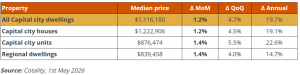
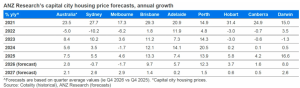
Here is the latest data on the median property prices for Brisbane.
Brisbane’s residential market continues to be characterised by:
- Record dwelling values.
- Limited housing stock.
- Strong owner-occupier demand.
- Continued investor participation.
- Growing demand for townhouses and apartments as affordability pressures increase.
Supply and Demand Imbalance
The Key Driver of Growth
The strongest contributor to ongoing price growth across SEQ remains the imbalance between housing supply and demand.
Demand Drivers
- Population growth.
- Interstate migration.
- Investor activity.
- First-home buyer participation.
Supply Constraints
- Housing completions continue to lag demand.
- Construction costs remain elevated.
- Ongoing labour shortages.
- Planning and development approval constraints.
The result is more buyers competing for fewer properties, supporting both capital growth and rental growth across the region.
Construction Costs and Development Challenges
Development feasibility remains under pressure as construction costs continue to rise.
Indicative Construction Costs
| Asset Type | Estimated Cost |
|---|---|
| Detached Housing | $2,800 – $4,950 per sqm |
| Townhouses & Units | $3,100 – $4,500 per sqm |
| Civil Subdivision Works | Approx. $167,000 per lot |
Industry forecasts suggest Brisbane may experience annual construction cost increases between 6% and 10% as Olympic-related infrastructure activity competes for labour and resources.
Key Challenges
- Skilled labour shortages.
- Rising material costs.
- Builder margin pressure.
- Project delivery delays.
- Increased competition for construction resources.
For developers, these factors highlight the importance of securing experienced funding partners and maintaining realistic project feasibility assumptions.
Rental Market Conditions
Rental Shortages Continue
The rental market remains one of the strongest sectors across SEQ.
Key trends include:
- Vacancy rates near historic lows.
- Strong population growth driving demand.
- Limited rental supply.
- Attractive investor yields compared with southern capital cities.
Investor Implications
Current conditions continue to provide:
- Strong cash flow support.
- Reduced holding costs.
- Consistent tenant demand.
- Positive rental growth prospects.
While rental growth may moderate from the exceptional increases recorded in recent years, the outlook remains positive throughout 2026.
Emerging Growth Corridors
As affordability pressures increase closer to Brisbane’s CBD, buyers are increasingly targeting established and emerging growth corridors.
Moreton Bay Region
- Caboolture
- Morayfield
- Burpengary
Ipswich Corridor
- Springfield Lakes
- Redbank Plains
- Ripley
Logan Growth Areas
- Strong affordability advantage.
- Ongoing infrastructure investment.
- Continued population growth.
Why These Locations?
- Better value relative to Brisbane’s inner suburbs.
- Larger land sizes.
- Access to major employment centres.
- Improving transport connectivity.
These locations are expected to remain key beneficiaries of population growth and affordability-driven demand.
Risks to Watch
While the long-term outlook remains positive, several factors warrant monitoring:
Interest Rates
Future Reserve Bank policy decisions will continue to influence borrowing capacity and buyer sentiment.
Affordability Pressures
Continued price growth may impact housing accessibility and reduce purchasing power for some buyers.
Government Policy
Potential changes to taxation settings, housing policy, and lending regulations may influence investor activity.
Construction Sector Challenges
Labour shortages, material costs, and project delivery risks remain ongoing concerns for developers and builders.
Despite these challenges, underlying demand fundamentals remain exceptionally strong.
Outlook: 2026–2030
The medium-term outlook for South East Queensland remains highly positive.
Expected Themes
✔ Continued population growth
✔ Ongoing housing undersupply
✔ Strong rental market conditions
✔ Infrastructure-led development
✔ Above-average capital growth
Less Likely Outcomes
✘ Significant market correction
✘ Housing oversupply
✘ Major decline in rental demand
South East Queensland is expected to remain one of Australia’s strongest-performing property markets over the medium term, supported by economic growth, infrastructure investment, and strong demographic trends.
Summary
South East Queensland remains exceptionally well positioned for continued growth.
Key drivers include:
- Strong population growth.
- Chronic housing shortages.
- Significant infrastructure investment.
- Brisbane 2032 Olympic Games legacy projects.
- Tight rental market conditions.
While growth rates may moderate from recent highs, the long-term fundamentals remain compelling for homeowners, investors, and developers alike.
For brokers and their clients, opportunities continue to emerge across residential investment, development finance, and commercial property sectors. Access to the right funding strategy and lender relationships will be critical in helping borrowers capitalise on the opportunities available throughout South East Queensland.